

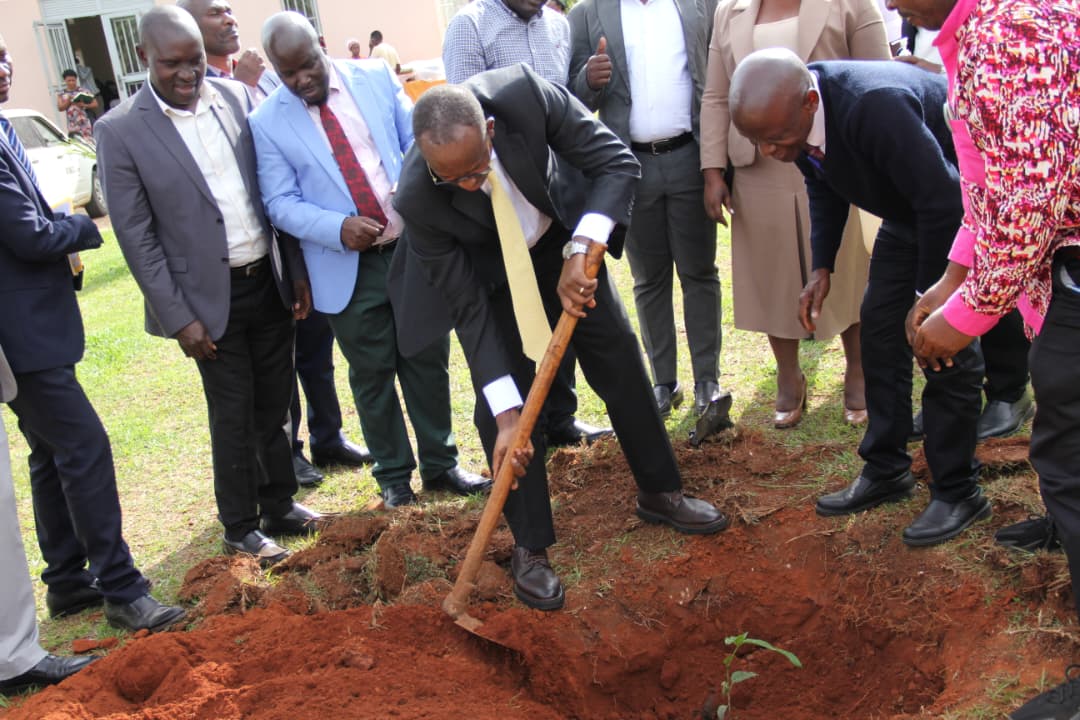
The government has announced plans to establish an agricultural aggregation centre in Ibanda District to improve the quality and competitiveness of Uganda’s agricultural exports, particularly coffee.
The announcement was made by Odrek Rwabwogo, the Senior Presidential Advisor on Special Duties and Chairman of the Presidential Advisory Committee on Exports and Industrial Development, during a courtesy visit to the district on Friday at the invitation of the district council.
While addressing district leaders and stakeholders, Rwabwogo said Uganda has enormous potential to increase its agricultural exports but continues to face setbacks due to challenges related to quality standards.
“Uganda has a wide variety of agricultural products that can compete on the international market, but our export volumes are still low because many of our products fail to meet the required quality standards,” Odrek Rwabwogo said.
He explained that the planned aggregation centre would serve as a central hub where agricultural produce from farmers can be collected, graded, stored, and prepared for export.
“By establishing an aggregation centre where all the relevant offices and services are brought together, we will improve the quality of produce and make it easier for farmers to access international markets,” he added.
Rwabwogo emphasized that improving quality control and coordination within the agricultural value chain is key to increasing Uganda’s export earnings.
The Chairperson of Ibanda District, Happy Herbert Mayanja, welcomed the government’s initiative and expressed the district’s readiness to host the facility.
“As a district, we are ready to host the aggregation centre. We already have enough land where the facility can be established to support our farmers and improve agricultural trade,” Happy Herbert Mayanja said.
An aggregation centre is a centralized facility that collects, grades, stores, and markets agricultural produce from smallholder farmers. Such centres help reduce post-harvest losses and connect farmers directly to larger markets.
These facilities often include storage infrastructure such as cold rooms, basic processing units, and offices that provide farmers with access to farm inputs, extension services, and market information.
Leaders believe that once established, the aggregation centre will significantly enhance the quality of agricultural produce from the region and strengthen Uganda’s position in the global export market, particularly for coffee, which remains one of the country’s leading export commodities.
